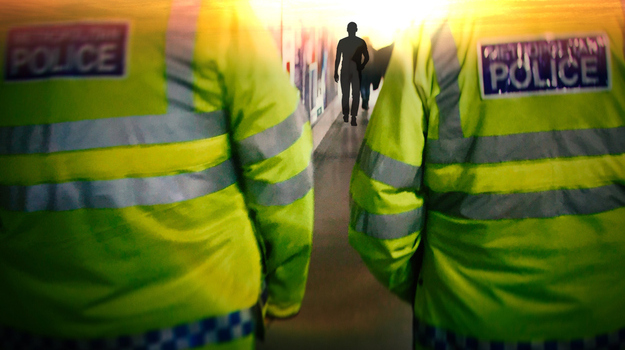


Contractors, cleaners, trainers and other non-police personnel working alongside the force all need NPPV clearance, but the level required depends entirely on the access the role involves. Learn how the four levels of NPPV differ, what checks and processing times to expect, and how NPPV compares to Recruitment Vetting and Management Vetting.
Non-police personnel vetting (NPPV) is the vetting framework used to check the suitability of civilians who work alongside the police but aren’t sworn officers, such as contractors, suppliers, volunteers and staff from partner agencies. It has four levels, ranging from basic site access through to roles with regular exposure to SECRET material and each UK police force administers the process through its own vetting unit in line with the national Vetting Code of Practice.
If you’re applying for a support or civilian role working alongside the police, the chances are you’ll need to undergo this process. Understanding what it involves, which level applies to your role and what to expect is essential if you’re to make a successful application.
As mentioned, NPPV is the process used to check the suitability of individuals who aren’t police officers but will be required to work alongside them, in the same locations and handling the same information. While police officers undergo their own vetting processes, NPPV is no less thorough. For roles carrying a higher risk of unauthorised access or corruption, it can in fact be more intensive than the standard recruitment vetting used for officers and police staff.
NPPV matters because it protects police forces from the risks posed by individuals who could misuse their access to premises, data or systems. By ensuring everyone who handles police information is reliable and trustworthy, forces can safeguard sensitive information, maintain the integrity of their operations and uphold public confidence in policing.
NPPV isn’t a single clearance but a structured system of three levels, the middle one split into two categories, giving four levels of clearance in total. The more sensitive or classified the information or systems a role involves, the higher the level required.
All levels include a check against the Police National Computer (PNC) and Police National Database (PND) to determine whether you have any criminal convictions or investigations that would preclude you from working with the police. This may also extend to close family members at higher levels.
Understanding these levels helps you know what to expect during vetting and why certain checks are necessary for your role. Here is a breakdown of the levels, their key requirements and the checks involved.
NPPV Level 1 grants access to police premises with no access to police information or materials, either digital or physical. It’s typically only needed for roles like maintenance or utility staff working in secure areas.
This allows unsupervised viewing of official-sensitive material on police premises, with no access to police systems or databases. It’s typically renewed every three years.
This level allows unsupervised access to official-sensitive material with occasional access to SECRET, normally renewed every three years.
NPPV Level 3 allows regular access to police material up to SECRET and occasional exposure to TOP SECRET information and has to be renewed every five years.
NPPV checks are required for any civilian who needs access to police premises, systems or sensitive information, including contractors, agency staff, volunteers and employees of partner organisations.
Because these individuals can come into contact with classified or confidential data, or need unsupervised access to secure areas, vetting is necessary to ensure they are trustworthy and do not pose a risk to police operations.
NPPV shouldn’t be confused with management vetting (MV) and recruitment vetting (RV), as the three apply to different groups. RV and MV are used for sworn officers and police staff, while NPPV exists specifically for non-police personnel working alongside the force.
In practice, almost everyone working with the police in some capacity will need NPPV clearance. Examples of roles that typically require it include:
Whichever level applies to your role, the process starts the same way, with a check against the PNC and PND to identify any criminal convictions or ongoing investigations that could affect your suitability. This isn’t limited to you alone, as the check can extend to close family members at Level 2 (Full) and Level 3, where lifestyle and associations carry more weight in the final decision. Having a conviction, either yours or a relative’s, isn’t necessarily an automatic refusal, as the vetting officer will weigh up the nature and seriousness of the offence and how long ago it occurred.
Checks include:
Processing time: typically a few weeks, provided there are no complications.
Checks include:
Processing time: typically a few weeks, in line with Level 1.
Checks include:
Processing time: several months, given the deeper financial and lifestyle checks involved.
Checks include:
Processing time: several months and can extend further where overseas residency, complex finances or slow referee responses are involved.
If you’re applying for a role that needs NPPV, it’s normal to have questions about what to expect. Here are some of the most common queries to help you feel prepared and confident.
How long does NPPV take?
The process can take anywhere from a few weeks for Level 1 or 2 (Abbreviated) clearances to several months for Level 2 (Full) or Level 3, especially if there are complications like overseas address history or complex finances.
What happens if I fail vetting?
For NPPV specifically, the decision usually comes from the force’s own vetting unit rather than a central body, so the rejection letter you receive will set out that force’s appeal route. This is generally more straightforward than appealing an SC or DV refusal, since it doesn’t involve UKSV.
What could disqualify me?
At NPPV level, the most common issues are flags raised by the PNC/PND check, unresolved debt or financial problems that show up at Level 2 (Full) or Level 3 and dishonesty on your application. Close associations with people involved in crime can also be a factor, but each case is judged individually and on its own merits.
Does NPPV include social media checks?
Yes. Your social media presence may be reviewed for signs of extremist views, offensive behaviour or anything else that could raise concerns about your integrity or suitability.
Will past minor offences automatically mean I fail?
Not necessarily, and this is one area where NPPV differs slightly by level. A minor or spent conviction is far less likely to be a problem at Level 1 or Level 2 (Abbreviated), where the checks are lighter, than at Level 3, where vetters are looking for patterns of behaviour rather than a single isolated incident.


© 2007 - 2024 SecurityClearedJobs.com

Would you like to meet your next employer face-to-face?
Network with 100s of hiring managers looking for your skills and clearance level!